Imagine this: You’re going through your closet and stumble upon a pile of T-shirts you really like-but they just don’t fit quite right. Maybe you’ve told yourself you’ll get them tailored someday, but let’s be honest-when does that ever actually happen?
If you’ve been holding on to those old band tees, oversized shirts, or cool graphic tops, take this as your cue to grab a pair of scissors and give them new life. Seriously, what’s the worst that could happen? At best, you’ll finally wear them again-and maybe even pick up a few DIY tricks along the way.
Why Cut or Customize Your T-Shirt?
Personalization and Individuality
Custom T-shirt printing is a way of permitting people to say who they are-something that gets lost through mass-produced clothing. And while store-purchased shirts are made to appeal to the masses, a custom tee is created for your needs only.
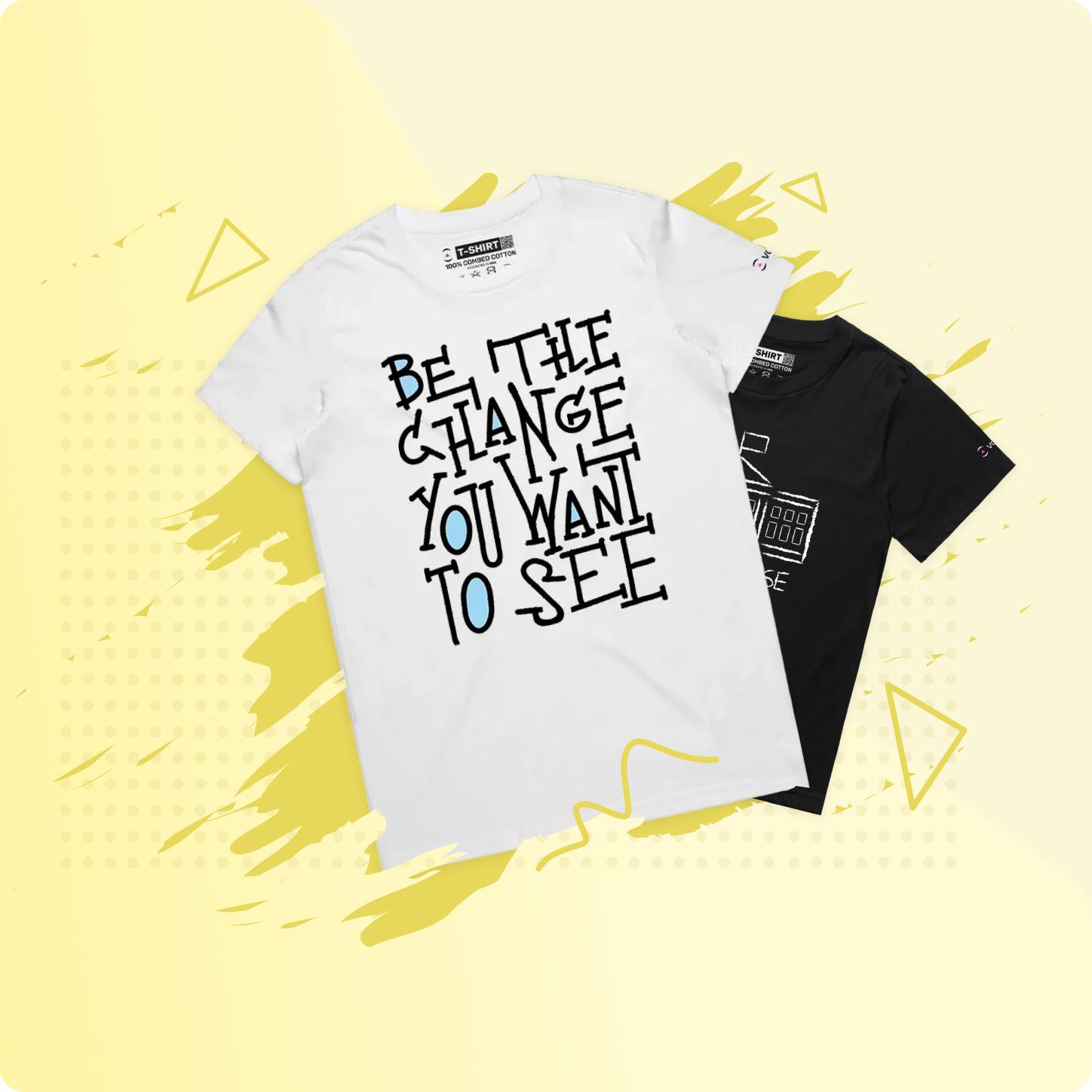
Whether it’s a funny quote, a motivational quote, or a picture that resonates with a personal philosophy, all custom shirts tell a story. It’s not something you throw on it, it’s a statement of your style, your ethics, your demeanor.
What’s great about custom T-shirts is that they enable you to put on something that speaks to you, something that is you. It’s not fashion; it’s a statement.
Branding and Marketing
Custom tee printing isn’t only for personal fashion, it’s also a savvy, budget-friendly marketing strategy for companies looking to make a lasting impression. With the world being as competitive as it is today, visibility of your brand is paramount, and custom tees present a unique opportunity to keep your brand at the forefront.
For companies, these shirts are not just pieces of clothing. They convey the message, values, and identity of the brand. With a nice design, a tee can be a walking billboard-turning any individual who wears it into a brand ambassador.
Whatever it is, a clean logo, a clever slogan, or a bold graphic declaration, a branded tee attracts notice and stimulates curiosity. It merges fashion with strategy so that businesses can connect with their audience in a way that’s significant and lasting.
Group Identity and Events
Personalized T-shirt printing is an easy yet powerful tool for uniting people. Whether for a recreational sports team, volunteer work, family reunion or company event, matching shirts instill a feeling of togetherness and common purpose.
One of the main advantages of having custom shirts or T-shirts for group events is the way in which they instantly bond people together. Everyone feels as though they belong to the same team, striving for something as one. It gives the event a sense of togetherness that makes it more special.
They do more than make the group appear put together. They make individuals feel welcome and appreciated, generating a feeling of belonging and providing long-lasting memories of the time shared together.

What You’ll Need: Tools & Materials
- Print on Demand (POD)
And if you want the easiest method with no equipment whatsoever, POD is the way to go. Printify is a service where you design digitally, choose a blank apparel product, and order. They print and ship, and you never have to physically handle a product. Great for starting a business or testing designs with no up-front investment.
You’ll need: Nothing but a computer and internet connection. - A cheap do-it yourself option.
Print your picture on an inkjet printer, place it on the shirt, and iron it in with a hot iron. Works best on cotton material.
You’ll require: Iron, Inkjet printer, transfer paper, scissors, and cotton t-shirts. - Direct-to-Garment (DTG) Printing
This process employs a specific printer that utilizes water-based ink to print directly onto fabric. It’s highly precise and durable but needs high-priced equipment.
You’ll need: DTG printer, heat press, and cotton shirts. - Heat Transfer Vinyl (HTV)
With vinyl sheets, a cutting machine, and a heat press, you can produce crisp, long-lasting designs. It’s ideal for multi-colored art and wears well over the years.
You will require: Vinyl cutter, heat press, weeder, HTV rolls, and cotton or polyester shirts. - Sublimation Printing
Sublimation combines ink directly into the material with heat and pressure. It’s one of the most long-lasting methods but will only work on polyester or synthetic fabrics.
You will require: Sublimation printer, heat press, synthetic shirts, and special paper and ink. - Embroidery
For a high-end feel, embroidery adds texture and elegance. Either subcontract to a POD service or use a digital embroidery machine. Works best for logos and basic designs.
You’ll need: Embroidery machine, thread, cotton or denim shirts, and standard sewing tools. - Screen Printing
A traditional technique for bulk orders. Ink is pushed through a mesh screen on to the shirt by way of a stencil. It’s affordable for large quantities and bold designs.
Materials you will need: Ink, squeegee, stencil, mesh screen, and blank shirts. - Fabric Painting
No equipment required-just your imagination. Paint directly onto fabric using brushes or sponges. It’s deal for single designs or for involving children.
You will need: Fabric paint, brushes, and cardboard to put on the back of the shirt.
Safety & Prep Tips
First, make sure your workspace is tidy, well ventilated, and well-lit-especially if you’re dealing with heat presses or fabric paints. Always read the instructions that come with your materials or tools and keep hot tools away from children.
Lay down protective sheets or cardboard to avoid staining surfaces. Pre-wash your shirts to remove chemicals that can affect the final design. And wear gloves when working with inks, vinyl, or any adhesives.
Some preparation goes a long way in ensuring that your do-it -yourself t-shirt experience is problem-free, safe and enjoyable.

7 Creative DIY T-shirt Cutting Styles (Step-by-Step)
- Make It a Crop Top
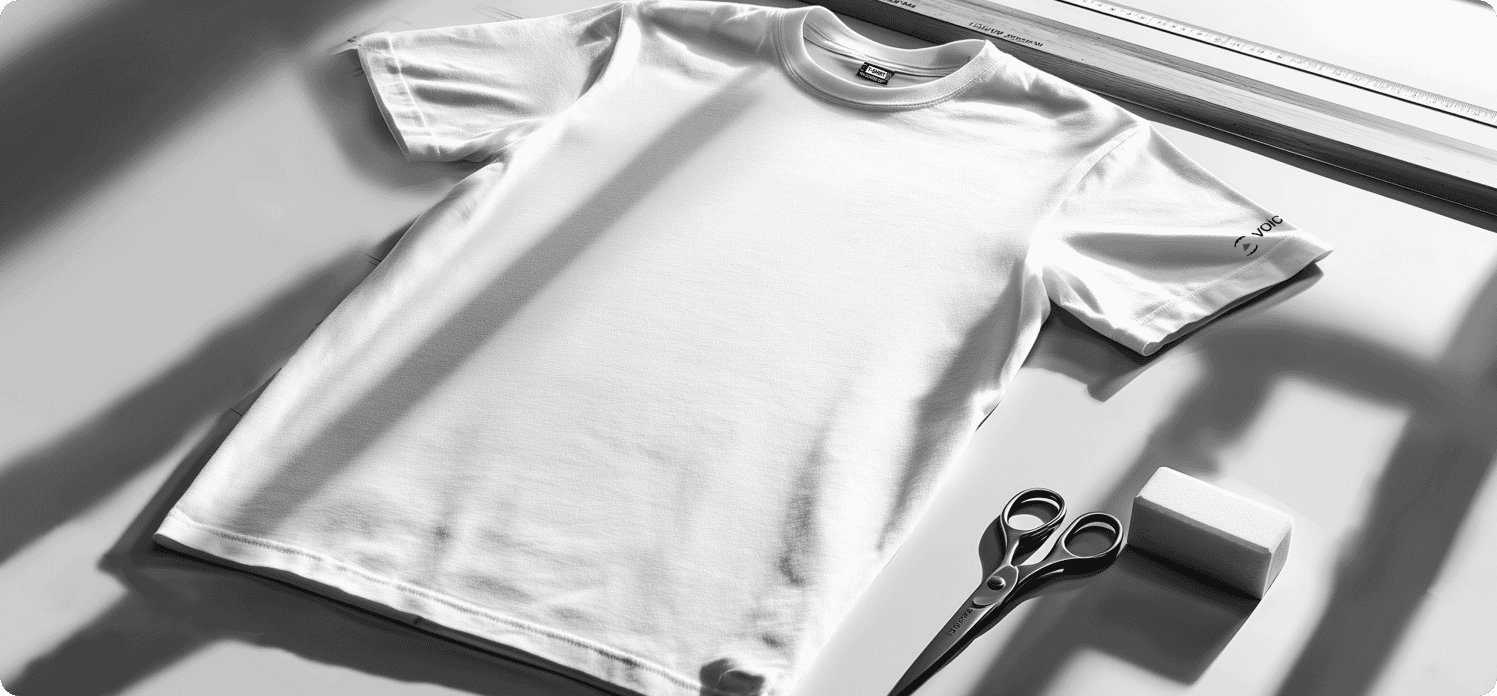
One of the simplest ways to give your shirt a makeover is to crop it. Use fabric scissors to cut off the lower part of the shirt to the length you want. For a cleaner cut, try the shirt on first and mark where you’d like the hem to fall. Start with a longer cut-then try it on and trim it more if needed.
You can also add fun designs along the bottom edge, like triangles, slits, or fringe. If the shirt has a graphic print, try cropping just below the design to keep it centered. - Create a Muscle Tee or Tank Top
Wanta breezy, laid-back look? Cut off the sleeves by following the seam around the armholes. The deeper you cut along the sides the more relaxed the fit will be. For an even more casual feel, snip out the neckline too to give it that soft, slouchy vibe.
To elevate the look even more, consider trimming the bottom hem and tying a knot in the front or side to pull the shirt in at the waist. - Widen the Neckline
Cutting out the collar gives your T-shirt a completely different silhouette. Simply trim around the neckline, removing the stitched hem. The more collar you cut away, the wider and more open the neckline becomes. This is a great way to turn a standard tee into an off-the-shoulder top.
To keep your cut even, fold the shirt in half so the shoulders align, and cut along the curve of the neck. If you prefer a V-neck, fold the shirt the same way and cut diagonally downward for a pointed neckline. - Add Side or Back Slits
Adding slits along the sides or back of your shirt creates a fun, edgy-detail-and also gives a little more room if the shirt is snug. Lay the shirt flat, smooth out any wrinkles, and make horizontal cuts about 1 to 2 inches long down each side. You can space the cuts evenly or mix it up for a distressed look.
If you want to cut the back, only slice through the back layer. You can experiment with vertical slits or even combine both directions for a more creative style. - Try Shoulder Cutouts
For a peek-a boo shoulder design, cut half-circle shapes from each shoulder area. Lay the shirt flat and find where the shoulder seams meet the sleeve seams. Carefully cut out a curved piece on one side, then use that piece as a guide to match the other side. This gives the shirt a fun, feminine detail without going over the top. - Weave the Neckline or Back S
Want something more intricate? Try creating a woven pattern. Start by cutting small vertical slits just below the collar or down the back of the shirt. The closer the cuts are, the tighter the weaves will look. After cutting, gently stretch the fabric so the strips are easier to work with.
To weave, take the second strip and loop it under and over the first. Then take the third and pull it through the second loop, and so on. When you get to the end, cut the final loop in half and tie it to secure the weave.
This technique works great for loose shirts since weaving tends to tighten the fit. - Add Sleeve and Back Bow Details
If you’re into softer, cuter style bows are a perfect addition. Start by cutting a small slit (about 2.5 inches) along each shoulder. Then, trim the bottom hem of the shirt and use that strip to tie bows on each sleeve.
For a bow-back design, flip the shirt over and scoop out a U-shape at the back neckline. Cut a horizontal slit a few inches lower down the back, then gather the fabric in between and tie it using another strip of extra fabric. Be sure to cut just inside the side seams so the shirt doesn’t stretch out too far.
If you want the bows to stay in place, use a bit of fabric glue or sew them down with a few simple stitches.
Customization Ideas Beyond Cutting
After you’ve cut and redesigned your T-shirt, the excitement doesn’t necessarily need to end there. There are lots of different ways that you can further customize your shirt and make something that is really all your own. Here are a few suggestions, ranging from subtle to make-a-statement ideas.
- Fabric Paint and Markers
Pick up some fabric paint or permanent fabric markers and start decorating. You can write your favorite quotes, draw patterns, doodle designs, or even replicate your favorite band logos. Freehand it for that homemade look or use stencils for sharp shapes. - Tie-Dye and Bleach Designs
Add some color (or remove it). Tie-dye is a timeless technique for a reason-it’s fun, colorful, and completely customizable. If you want a more grunge or vintage look, attempt creating patterns with a bleach pen on dark T-shirts. Just make sure to work in a well-ventilated area and wear gloves. - Embellishments and Patches
Sew on fabric patches iron-on designs, or add embellishments like rhinestones, studs, or pearls. This is a great way to add personality or cover up errors in cutting or painting. You can even use patches from other old clothes to make it truly unique. - Embroidery Accents
If you’re crafty with a needle and thread, experiment with adding a small embroidery design. Even a simple heart, smiley face, or initials near the hem or pocket can go a long way. Hand embroidery adds a warm, one-of-a-kind touch to your shirt. - Fabric, Mesh, or Lace Inserts
Cut a section from your shirt and fill it in with lace or mesh for a neat contrast. Try it along the shoulders, sides, or back. You can stitch it in or apply fabric glue for a no-sew option. This adds texture and complete custom feel.
Looking to add a humorous twist to your DIY T-shirt? Explore our collection of witty designs for inspiration.
Where & When to Rock Your Custom Tee
Depending on the message you want to convey, you can wear your custom tee on various occasions. For example, if you are attending a casual party, you can wear a tee with a funny print. On the other hand, if you have a special occasion, you can choose a T-shirt that is made of fine fabric and has a print suitable for that occasion. Additionally, planning to showcase your DIY tee at a special event? Our ‘Occasions‘ collection offers designs tailored for memorable moments.
Tips for Making It Look Professional
Know Your Body Type
To look good in a T-shirt, you must be familiar with five main body types and know your body type. The first T-shirt you try won’t probably flatter your body shape and size, therefore, it’s necessary to know whether you are rectangular, triangle, trapezoid, oval, or inverted triangle body type.
Nail the Fit
This is the most important part of the style pyramid. A good T-shirt fit must conform to your body shape and mustn’t cause discomfort or restrict movement or freedom.
V-neck or Crew Neck
For example, V-necks T-shirts look great on fit men because they can point out and show off build-up chest. V-necks tend to create an illusion of balance and height, especially if you have a narrow face and short neck.
On the other hand, crew necks are a better choice for men with a thinner frame. This type of style won’t expose your neck, they will draw less attention to your upper torso, which is great if you haven’t been physically active for a long time. Which style suits you best, well it’s up to you to decide.
Choose The Right Fabric
Fabric is the crucial factor that determines the T-shirt quality. If you want to look professional, the fabric you choose must be awesome. Two T-shirts might be identical in design, but the one that has better fabric will always outperform.
Conclusion
Now that you know how to cut and customize your tee it’s time to start working on your first custom T-shirt. On the other hand, are you ready to bring your custom T-shirt vision to life? Explore our diverse categories to find the perfect design that resonates with you.